
Box ways and linear guideways solve the same problem in different ways: they support machine movement while resisting cutting forces. Traditionally, box ways have been known for damping and heavy roughing, while linear guideways have been known for speed, low friction, and fast response.
That comparison is useful, but it is incomplete.
Modern VMC buyers should not compare “box way vs linear guideway” as if every linear system is the same. A light-duty ball linear guide is very different from a large roller or cross-roller linear guide system. The real question is how the guideway works with the machine casting, spindle taper, torque, table load, thermal control, and intended application.
For many shops, especially those cutting steel, aluminum, molds, and mixed job-shop work, a rigid cross-roller linear-guide VMC can deliver the speed advantages of linear guideways without being limited to light-duty machining.
Quick Answer
Box ways use sliding contact. They provide strong damping and load support, which makes them well suited for roughing, interrupted cuts, and difficult materials.
Linear guideways use rolling contact. They reduce friction, improve responsiveness, and support faster acceleration and rapid movement.
The strongest modern comparison is not simply:
Box way vs linear guideway
It is:
Box way vs ball linear guideway vs roller or cross-roller linear guideway
That distinction matters because a heavy-duty roller or cross-roller linear-guide machine can handle far more demanding work than older linear-guide stereotypes suggest.
What Are Box Ways?
Box ways are sliding-contact guideways built into the machine structure. Their broad contact area helps support cutting loads and absorb vibration. This is why box-way machines are commonly used for heavy roughing, large workpieces, and interrupted cuts.
The tradeoff is friction. Sliding contact requires more force to move, more lubrication attention, and generally slower axis movement than rolling-contact systems. For shops focused mainly on speed, acceleration, contouring, and cycle time reduction, that added friction can become a limitation.
What Are Linear Guideways?
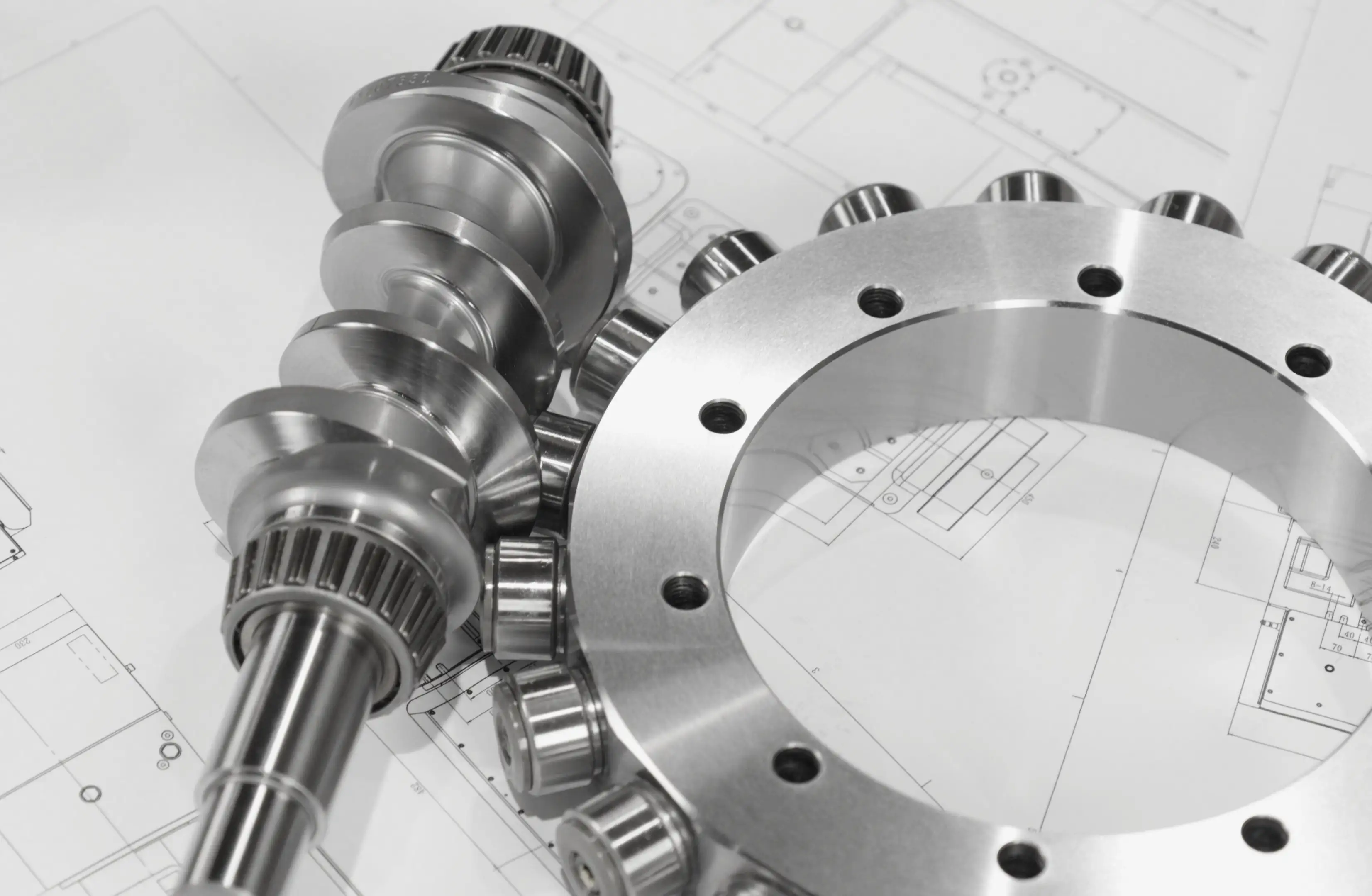
Linear guideways use rolling elements instead of sliding contact. This reduces friction between the moving axis and the guide surface, allowing faster movement, quicker acceleration, and more responsive positioning.
That is why linear-guide VMCs are widely used for high-speed production, aluminum machining, finishing, mold work, and contouring.
However, “linear guideway” is too broad as a category. A basic ball-type guideway should not be judged the same way as a large roller or cross-roller linear guide system. Lighter ball-guide machines are designed for speed and efficiency, while larger roller or cross-roller systems add more load support and rigidity.
This is where many box way vs linear guideway comparisons become outdated. They treat all linear guideways as light-duty rails, when modern heavy-duty linear platforms are built very differently.
Box Way vs Linear Guideway Comparison
Feature | Box Way | Standard Linear Guideway | Roller / Cross-Roller Linear Guideway |
Motion principle | Sliding contact | Rolling contact | Rolling contact with stronger load support |
Main strength | Damping and heavy-load stability | Speed and responsiveness | Speed with higher rigidity |
Best-known use | Roughing, interrupted cuts, large loads | High-speed production, finishing, contouring | Mixed job-shop work, steel, aluminum, molds, and demanding production |
Typical concern | More friction and slower movement | Lower inherent damping | Performance depends heavily on rail size, casting, spindle, and machine design |
Best fit | Heavy roughing | Fast production and finishing | Shops that need both speed and serious cutting capability |
Are Linear Guideways Good for Heavy Cutting?
Yes, when the machine is designed for it.
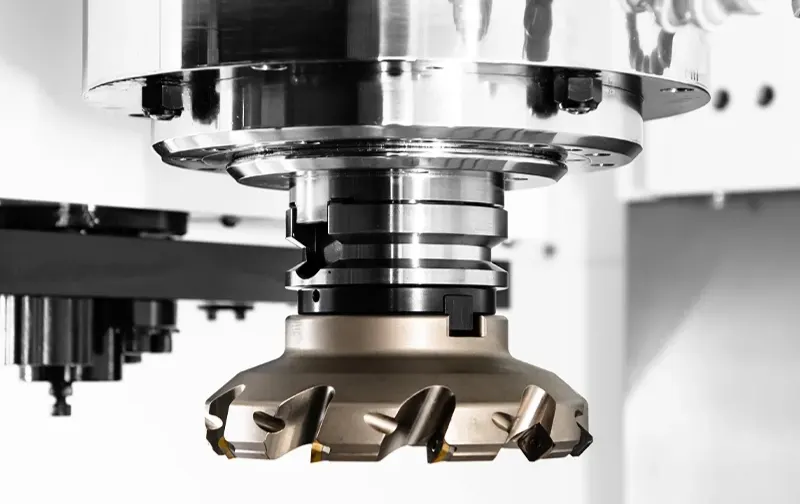
A light-duty ball linear-guide machine is not the same as a heavy-duty roller or cross-roller linear-guide VMC. The guideway type matters, but so does the size of the guide system, the casting structure, the spindle taper, the torque output, the table load, and the thermal control system.
For heavy cutting, the better question is not:
Can linear guideways handle heavy cutting?
The better question is:
What kind of linear guideway is being used, and what machine structure is supporting it?
A rigid cross-roller linear-guide platform with the right casting and spindle package can be a strong choice for shops that want heavy cutting capability without giving up speed.
Why Machine Structure Matters as Much as Guideway Type
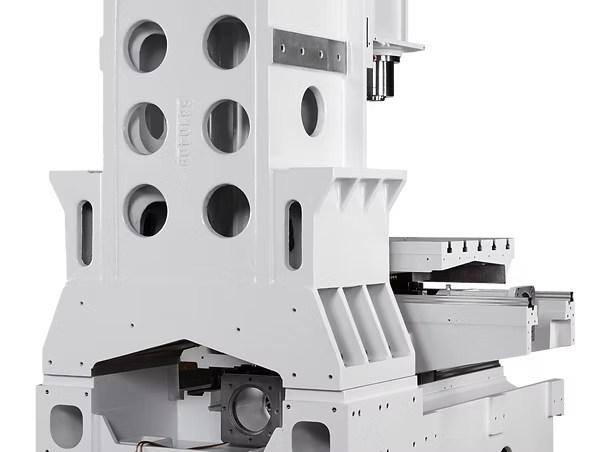
Guideways do not work alone. A machine’s real-world cutting performance comes from the full structure.
Box ways bring damping and load support. Linear guideways bring speed and low friction. But the final result depends on how the whole machine is engineered.
A strong VMC platform needs:
Rigid casting
Proper rib design
Correct guideway sizing
Spindle power and torque matched to the application
Sufficient table load capacity
Thermal compensation for dimensional stability
The right spindle taper for the material and tooling
Micro Dynamics machines use large cross-roller linear guides together with rigid cast structures to maintain machining stability while preserving the speed advantages of linear guideways.
Linear guideways are already known for smooth motion, low friction, fast rapid traverse, and accurate positioning. By using oversized guideways, Micro Dynamics adds another layer of mechanical strength. Larger guideways increase contact area, improve load distribution, and help the machine resist bending, twisting, and deflection under cutting forces.
Oversized linear guideways help support heavier table loads, reduce vibration and chatter, improve dynamic accuracy, and keep the machine more stable during aggressive cutting.
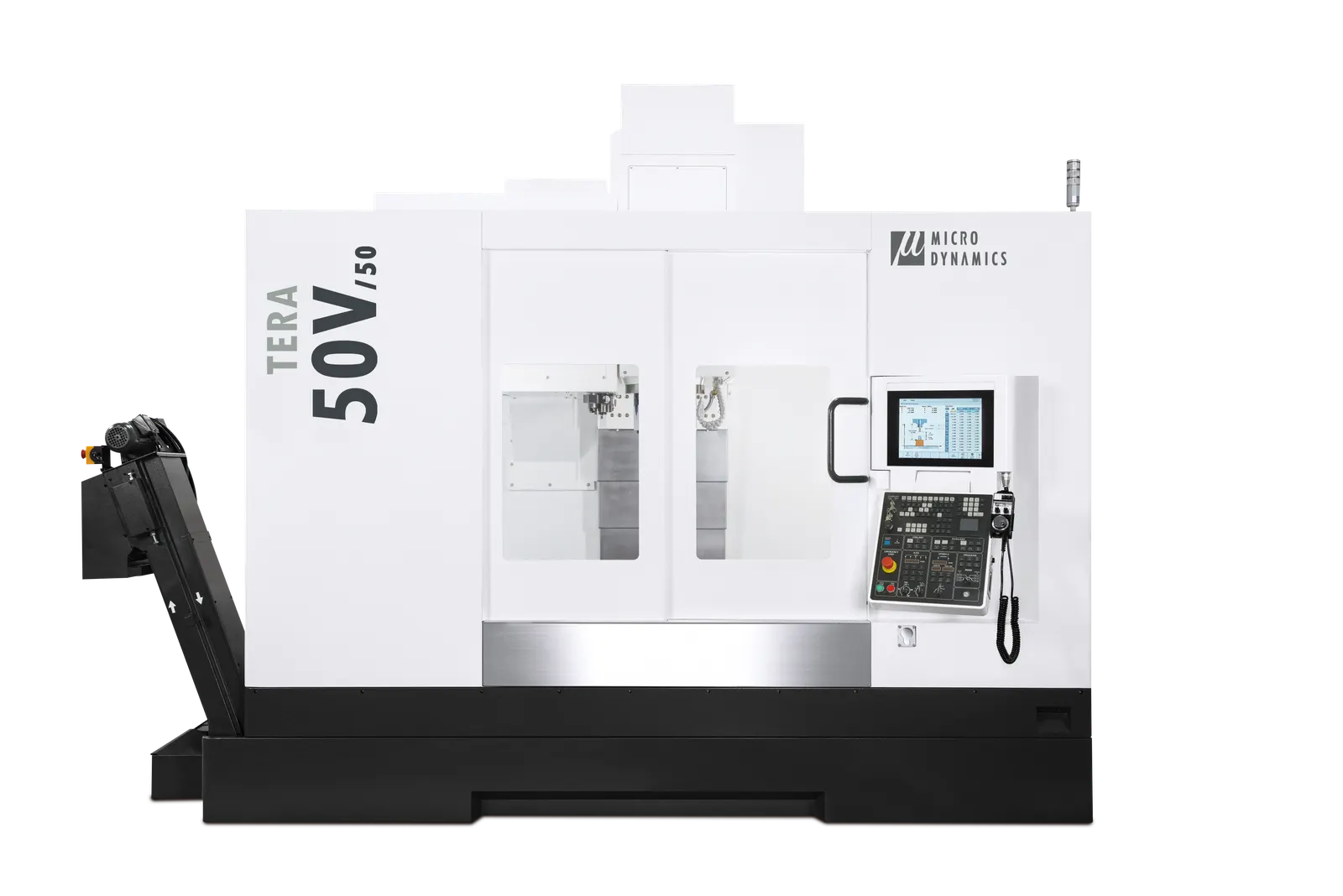
On the TERA 50V, Micro Dynamics combines FC300 Meehanite casting, FEA-optimized rib design, 52 m/min X/Y rapids, 31 kW power, 141 Nm torque, 1,500 kg table load, and DYPEC thermal compensation. DYPEC corrects thermal position error in real time, helping improve accuracy and part finish during longer machining cycles.
This is the point many simple comparisons miss: guideway type matters, but it only makes sense inside the full machine architecture.
Where 40 Taper and 50 Taper Change the Decision
Spindle taper changes the conversation because it affects tooling size, cutting force, torque transfer, and the type of work the machine is expected to handle.
A 40-taper cross-roller linear-guide VMC is a strong fit for shops that need speed, precision, and throughput across a wide range of parts. The TERA 50V uses a 40-taper dual-contact spindle with 15,000 rpm standard speed, 31 kW power, 141 Nm torque, and 52 m/min X/Y rapid feedrate.
That makes it a strong platform for shops that need a fast, rigid, high-productivity VMC for steel, aluminum, molds, and general production work.
A 50-taper machine changes the priority toward larger tooling, higher torque, and more aggressive cutting. The TERA 50V/50 uses a 50-taper dual-contact spindle with 34 kW power, 570 Nm torque, and 52 m/min X/Y rapids. It is designed for heavier cutting while still keeping the speed advantages of a modern linear-guide platform.
This is why buyers should not assume that a linear-guide VMC is automatically a light-duty machine. A 50-taper cross-roller linear-guideway VMC is a different category: it combines heavy spindle capability with faster axis movement than many traditional heavy-duty platforms.
For even larger work, the TERA 60V/50 expands the same idea with higher torque output and support for larger, heavier tooling such as face mills in the 160–200+ mm range.
Which Guideway Design Fits Your Shop?
Shop Need | Better Fit |
High-speed aluminum production | Linear guideway |
Mold finishing and contour work | Linear guideway or cross-roller linear guideway |
Mixed-material job shop | Cross-roller linear guideway |
Aggressive roughing with large interrupted cuts | Box way or heavy-duty roller/cross-roller platform |
Steel machining with larger tools and deeper cuts | 50-taper machine platform |
Long-run dimensional stability | Rigid structure plus thermal compensation |
Speed plus serious cutting capability | Cross-roller linear-guide VMC with the right spindle package |
Common Myths About Box Ways and Linear Guideways
Myth: All linear-guide machines are light-duty.
Not true. Some lighter ball-guide machines are built mainly for speed and efficiency, but larger roller and cross-roller systems are designed for much more demanding work. The machine structure, spindle taper, torque, and casting determine the real capability.
Myth: Box ways are always more accurate.
Not necessarily. Box ways provide strong damping, but accuracy also depends on friction control, thermal behavior, machine geometry, servo response, and overall construction. A modern linear-guide machine with a rigid structure and thermal compensation can hold excellent accuracy while moving faster.
Myth: Linear guideways are only for aluminum.
Too simple. Linear guideways are excellent for high-speed aluminum machining, but heavy-duty roller and cross-roller platforms can also be strong choices for steel, mold work, and mixed production.
Myth: Guideway type matters more than the rest of the machine.
False. Guideway type is only one part of the machine. Casting rigidity, spindle taper, torque, table load, rib design, thermal compensation, and servo tuning all shape the final cutting result.
FAQs
What is the difference between a box way and a linear guideway?
Box ways use sliding contact and are known for damping and load capacity. Linear guideways use rolling contact and are known for lower friction, faster movement, and better responsiveness.
Is the box way better than the linear guideway?
Not universally. Box ways are strong for damping and roughing. Linear guideways are strong for speed, precision, and productivity. A heavy-duty roller or cross-roller linear-guide machine can also handle demanding cutting when it is built with the right structure and spindle platform.
Are linear guideways good for steel machining?
Yes, when the machine is designed for steel. Larger roller or cross-roller guide systems, rigid casting, strong spindle torque, and thermal compensation all help make linear-guide machines suitable for steel machining.
Which guideway is better for aluminum?
For high-speed aluminum machining, linear guideways are usually the better fit because they support faster acceleration, faster movement, and shorter cycle times.
Can a 50-taper VMC use linear guideways?
Yes. A 50-taper VMC can use linear guideways, provided they are properly sized for the machine’s cutting forces. Micro Dynamics uses oversized cross-roller linear guideways, allowing the TERA 50V/50 to deliver the rigidity and load capacity required for 50-taper machining while retaining the speed, responsiveness, and low-friction movement of a linear-guideway design.
Conclusion
The traditional box way vs linear guideway debate is still useful, but it is no longer enough.
Box ways remain strong for damping and heavy roughing. Linear guideways remain strong for speed, responsiveness, and productivity. But modern buyers should look beyond the old either-or comparison.
The better question is whether the machine combines the right guideway system, cast structure, spindle taper, torque, table load, and thermal control for the work being done.
For shops that need speed, precision, and serious cutting capability, a rigid cross-roller linear-guide machine, especially in a 50-taper configuration, can be a strong alternative to the traditional box-way-only view.
If you want to compare your part mix, tooling size, material, and cut style against a 40-taper or 50-taper platform, talk with Micro Dynamics or your nearest dealer before reducing the decision to a simple “box way versus linear guideway” checklist.