
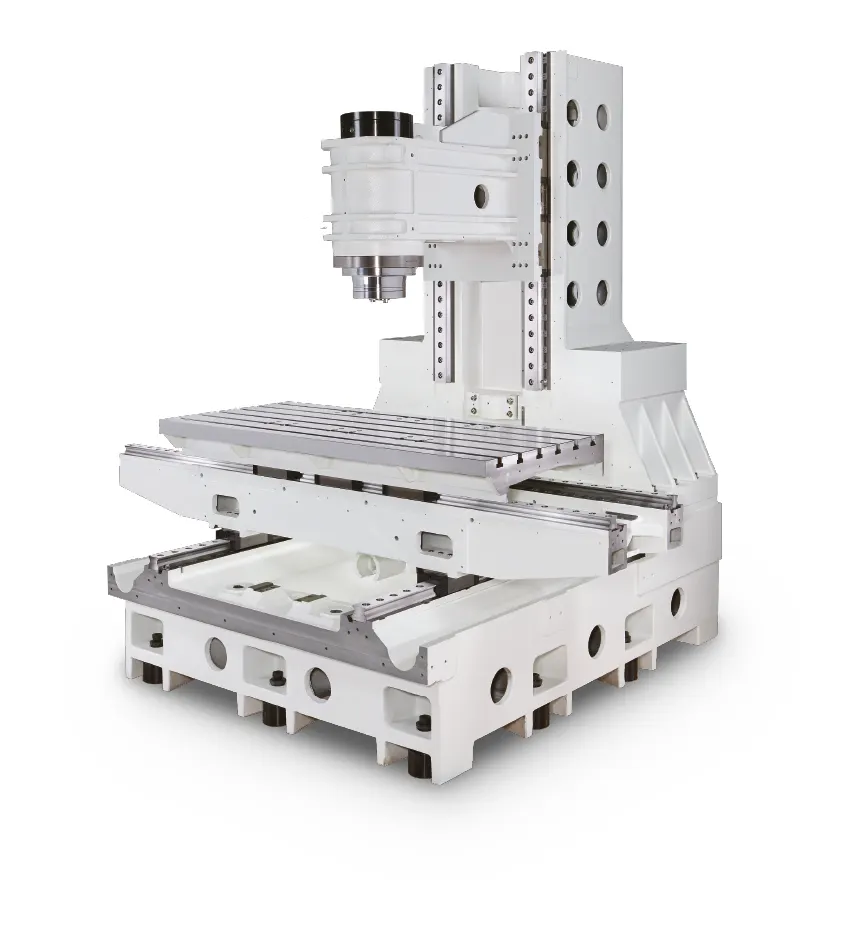
CNC machine structure is the foundation of machining accuracy, stability, and long-term performance. While spindle speed and control systems often get the most attention, the machine frame ultimately determines how well everything else performs.
Every machining process introduces force, vibration, and heat into the system. If the structure cannot control these variables, accuracy drops, surface finish suffers, and repeatability becomes inconsistent. This is why structure is the core of machining performance.
At MicroDynamics, we design every machine around structural integrity first, ensuring performance is built into the machine itself.
Common CNC Machine Structures
CNC machines are typically built around a few core structural designs, each with its own strengths and limitations.
C-frame (cantilever) machines are the most common vertical machining centers. They are compact and flexible, but rely heavily on proper structural design to maintain rigidity, especially as the spindle moves away from the column.
Gantry or bridge machines use dual columns to support the spindle from both sides. This eliminates overhang and provides maximum rigidity, making them suitable for very large or heavy workpieces. The trade-off is increased size, weight, and cost.
Bed-type machines use a fixed base with a moving table, minimizing leverage and improving stability during heavy cutting. These are often used in applications where rigidity is more important than flexibility.
Each of these designs influences how the machine behaves under load, which is why the structure should always be evaluated alongside specifications.
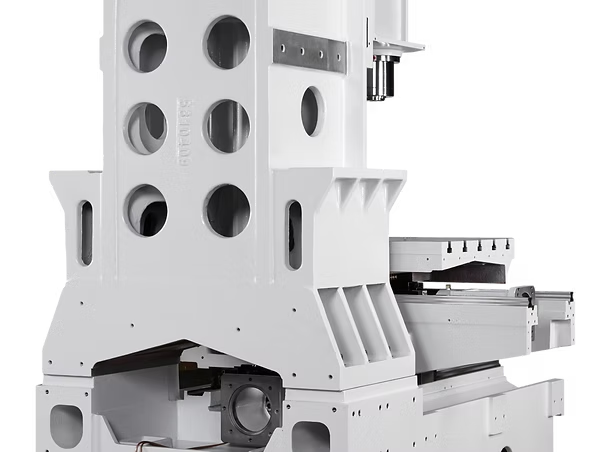
MicroDynamics C-frame machines are built around a heavily ribbed FC300 Meehanite casting, optimized through finite element analysis (FEA) for maximum rigidity and long-term stability. The MEGA and TERA series represent two C-frame sizes, both designed with a compact footprint while maintaining structural strength. Key design elements include a symmetric structure to control thermal distortion, a wide base for improved stability, and a honeycomb ribbed internal design to maximize stiffness without unnecessary weight. Critical surfaces are hand scraped to ensure precise contact and alignment, further enhancing accuracy and consistency during machining.
Why Rigidity Directly Impacts Accuracy
Rigidity defines how much a machine deflects under cutting force. Even small amounts of deflection can lead to measurable errors in the finished part.
A rigid structure allows the machine to maintain dimensional accuracy while running higher cutting forces. This improves both productivity and consistency, particularly in materials that generate a significant load on the tool.
MicroDynamics machines use heavily ribbed Meehanite cast iron frames, optimized through finite element analysis to maximize stiffness while maintaining efficient mass distribution.
Learn more about our structural design approach: https://www.microdynamicsfa.com/technology/structure
Vibration Control and Surface Finish
Vibration is one of the primary causes of poor surface finish in CNC machining. When cutting forces excite the structure, the resulting oscillation feeds back into the tool, creating instability.
Cast iron plays an important role here. Its internal structure naturally absorbs vibration, reducing the likelihood of chatter and stabilizing the cutting process. This allows the machine to operate at higher feed rates while maintaining consistent surface quality.
Box Ways vs Linear Guides
Guideway design is another critical part of the machine structure.
Box ways use large sliding contact surfaces that provide excellent damping and load capacity, making them suitable for heavy cutting. However, they introduce higher friction and require more maintenance.
Linear guides use rolling elements to reduce friction, allowing higher speeds and faster acceleration. The trade-off is lower inherent damping, which makes the overall structure more important for stability.
MicroDynamics machines use large cross-roller linear guides, combining high-speed capability with a rigid cast structure to maintain machining stability.
Thermal Stability and Accuracy Over Time
Thermal effects are one of the most common sources of long-term machining error. As the machine heats up, components expand, which can gradually shift alignment and reduce accuracy.
A well-designed structure reduces this effect by making thermal behavior more stable and predictable. Symmetrical layouts, stable castings, and proper component placement all help reduce uneven thermal distortion.
MicroDynamics combines this structural approach with DYPEC thermal compensation, allowing the machine to actively correct thermal position error instead of relying only on mechanical stability.
DYPEC Thermal Compensation: Real-Time Accuracy Control
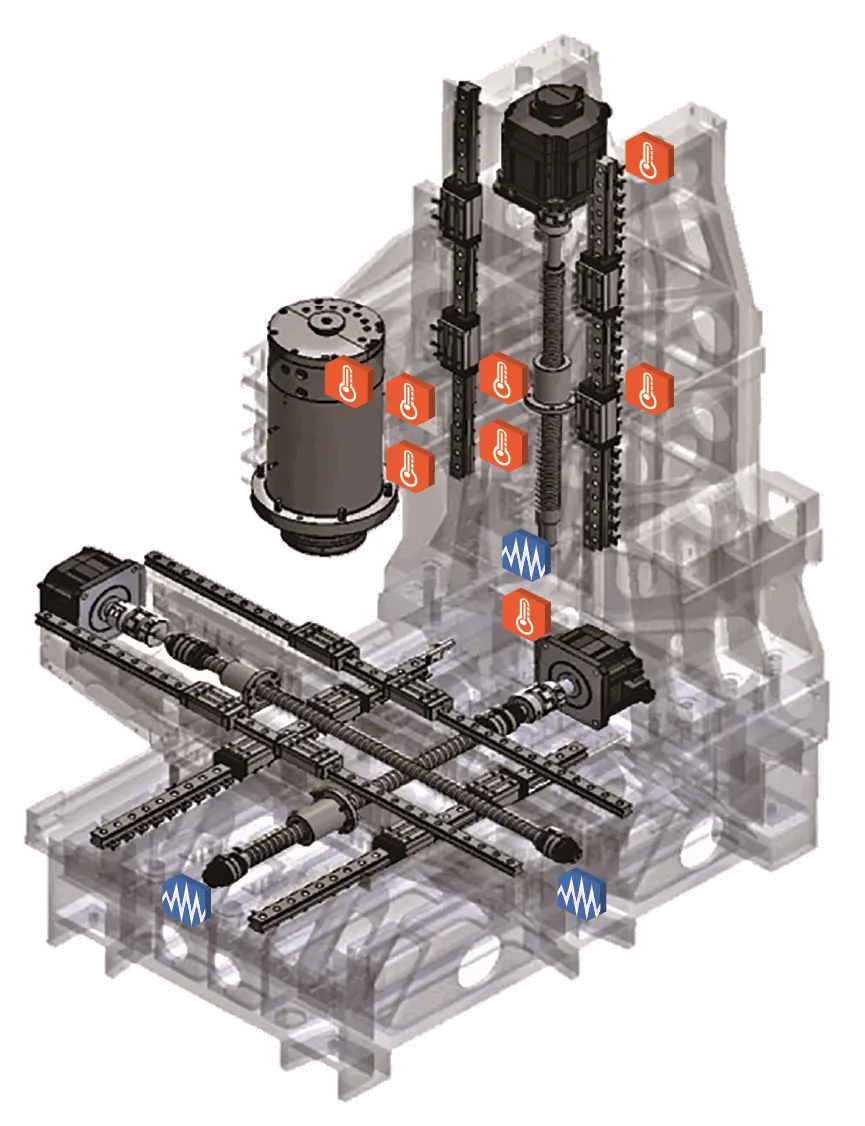
Thermal stability is not only a structural issue. It also has to be controlled dynamically as the machine runs.
MicroDynamics machines use DYPEC: Dynamic Predictive Error Compensation to correct position error caused by thermal changes in real time. DYPEC operates with a compensation resolution of 0.1 μm, helping maintain accuracy and surface finish as the machine temperature changes during long machining cycles.
This matters because heat does not affect every part of the machine equally. The spindle, column, casting, ballscrews, guideways, and surrounding environment all change temperature at different rates. Those changes can shift the real tool position even when the CNC control still believes the machine is exactly on coordinate.
DYPEC closes that gap by monitoring machine and environmental conditions, then compensating for thermal movement directly in the control system. Instead of relying on warm-up cycles or manual offsets, the machine continuously corrects itself during operation.
Learn more: https://www.microdynamicsfa.com/technology/dypec
Geometric Calibration: Correcting the Natural Behavior of the Machine
Even with high-quality castings, precision grinding, and careful assembly, no machine structure is perfectly straight, square, or neutral in every direction.
Large castings, guideways, tables, columns, and moving assemblies all have natural geometric behavior. Small bends, twists, straightness deviations, pitch, yaw, roll, and squareness errors are inherent realities of machine building, especially in heavy, long-travel structures.
During calibration, these behaviors are measured and mapped. Each axis is moved through its travel while precision systems detect how the real position deviates from the ideal position.
This is where machine accuracy becomes more than just mechanics:
When X moves, Y and Z can shift slightly
When Z extends, the spindle can tilt microscopically
Across full travel, the tool path can deviate from a perfect line
By mapping these behaviors, the control system builds a compensation model. It then makes tiny coordinated adjustments across multiple axes to maintain the correct tool center point.
This is known as geometric or volumetric compensation.
In practical terms, accuracy comes from two combined systems:
A mechanically rigid, stable structure
A calibrated control system that compensates for real-world deviations
Structure defines the baseline. Calibration reveals the truth. Compensation delivers the final accuracy.
Real-World Impact on Machining Performance
Structural design directly affects how a machine performs in production.
A rigid, well-balanced machine maintains accuracy across long machining cycles without constant adjustment. Surface finishes remain consistent, and tool life becomes more predictable because cutting conditions are stable.
Structural engineering produces measurable results: better parts, less rework, and more efficient machining.
Machine Size, Footprint, and Practical Considerations
Machine structure also influences footprint and logistics.
MicroDynamics machines are designed to maintain high rigidity within a compact footprint, typically ranging from approximately 2.4–3.0 m × 2.2–2.3 m (7.8–10.0 ft × 7.2–7.5 ft), with machine weights generally around 6,300–6,600 kg (13,900–14,550 lbs) depending on the model.
This allows efficient shipping, easier installation, and better shop floor utilization compared to larger machine designs without sacrificing structural performance.
Conclusion
CNC machining is governed by force, vibration, and thermal behavior. The structure determines how effectively these factors are controlled, and ultimately defines the machine’s performance.
At MicroDynamics, we design machines where structure comes first. By combining rigidity, vibration control, thermal compensation, and geometric calibration, we ensure every machine delivers consistent, high-precision results in real-world conditions.
Because accuracy is built into the machine from the start.