
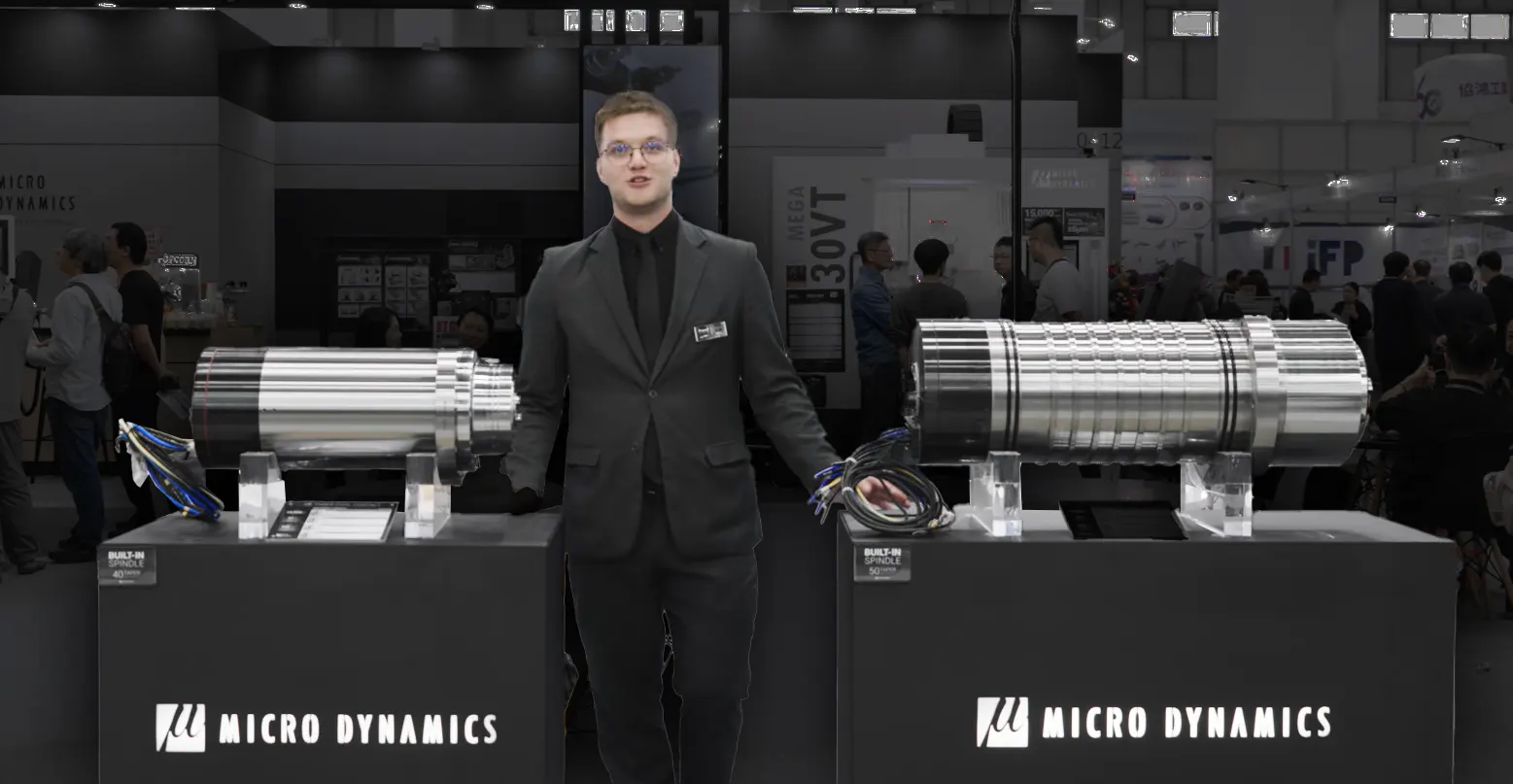
The spindle is the core of any CNC machine. It defines cutting performance, surface finish, accuracy, and ultimately the type of work a machine can handle.
Different spindle configurations exist because machining requirements vary widely. High-speed finishing, heavy roughing, micro-machining, and deep drilling all place different demands on speed, torque, rigidity, and thermal stability.
Understanding how each spindle type works, and where it performs best, is critical when evaluating a CNC machine.
The Main Types of CNC Spindles
CNC spindles are typically classified by how power is transmitted to the spindle shaft. The most common configurations are built-in (integral), belt-driven, direct-drive, gear-driven, and air turbine spindles.
Each design represents a different balance between speed, torque, rigidity, and complexity.
Built-In (Integral Motor) Spindles
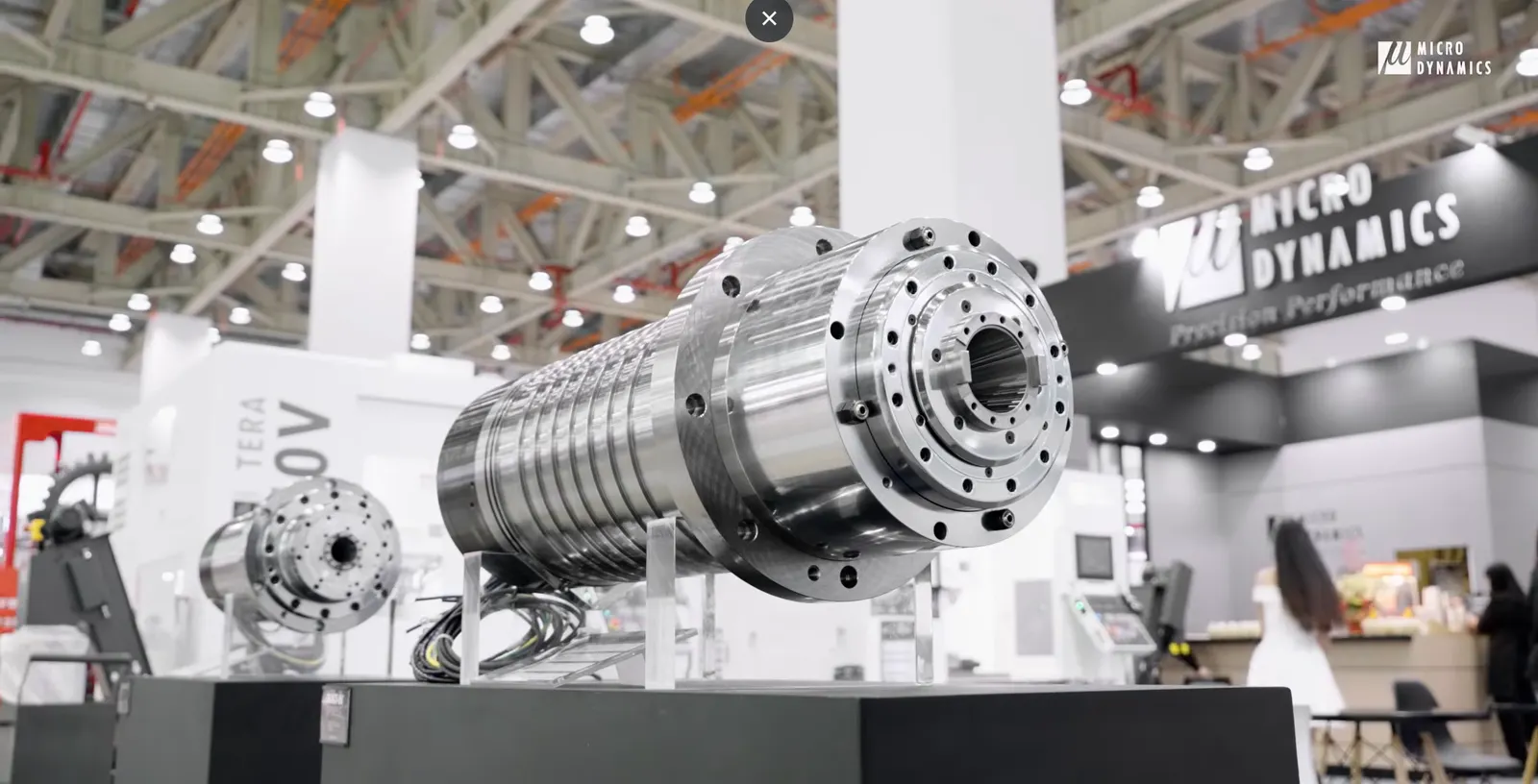
A built-in spindle integrates the motor directly into the spindle housing. The rotor and shaft become a single system, eliminating belts, couplings, and intermediate components.
This configuration creates a compact, rigid structure with very short force paths between the cutting tool and the machine column. The result is high precision, low vibration, and fast acceleration.
Microdynamics machines use built-in spindles as standard, with configurations around 15,000 rpm and higher-speed options up to 24,000 RPM available. These spindles use hybrid ceramic bearings and integrated cooling systems to maintain stability under continuous operation.
Learn more about Microdynamics spindle technology:https://www.microdynamicsfa.com/technology/spindle
Usually, the trade-off is complexity. Servicing requires more specialized work, and replacement costs are higher compared to simpler systems, but all Micro Dynamics spindles are built with off-the-shelf standard bearings which can be replaced without removing the rotor. This makes all machines simple and fast to maintain. Rebuild costs are very low due to the short service time. (Except 20,000 rpm)
Belt-Driven Spindles
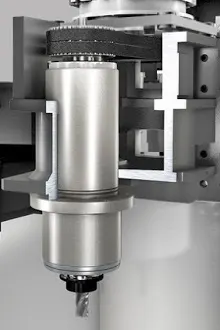
Belt-driven spindles use an external motor connected to the spindle via belts and pulleys. This is one of the most traditional spindle designs and remains widely used due to its simplicity and cost-effectiveness.
Belts provide a degree of flexibility in the system, which can help absorb shock loads and make the spindle more tolerant of heavy cutting conditions. They are particularly effective at delivering high torque at lower speeds, making them suitable for roughing operations.
However, this flexibility comes at the cost of rigidity and precision. Belt stretch, slip, and vibration limit maximum speed and reduce overall accuracy. In most applications, belt-driven systems are constrained to lower RPM ranges compared to integrated or direct-drive designs.
For an overview of belt vs built-in spindle differences:https://www.mylascnc.com/differences-and-applications-of-belt-driven-and-built-in-spindles
Direct-Drive Spindles
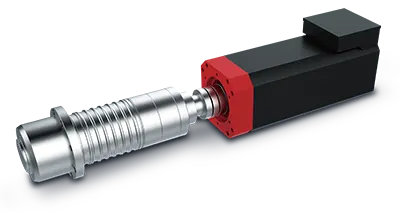
Direct-drive spindles eliminate belts but keep the motor separate from the spindle housing. The motor is coupled directly to the spindle shaft, removing the compliance associated with belt systems.
This results in improved speed control, reduced vibration, and better surface finish. Direct-drive systems also respond more quickly to speed changes, which is important for operations like rigid tapping or high-speed toolpaths.
Compared to built-in spindles, direct-drive systems offer similar performance characteristics but may require more space due to the external motor. Thermal management is still a concern, as heat from the motor is transferred into the spindle assembly.
For a deeper comparison of spindle drive systems:https://blog.fepotec.com/2026/01/18/spindle-drive-system-comparison
Gear-Driven Spindles
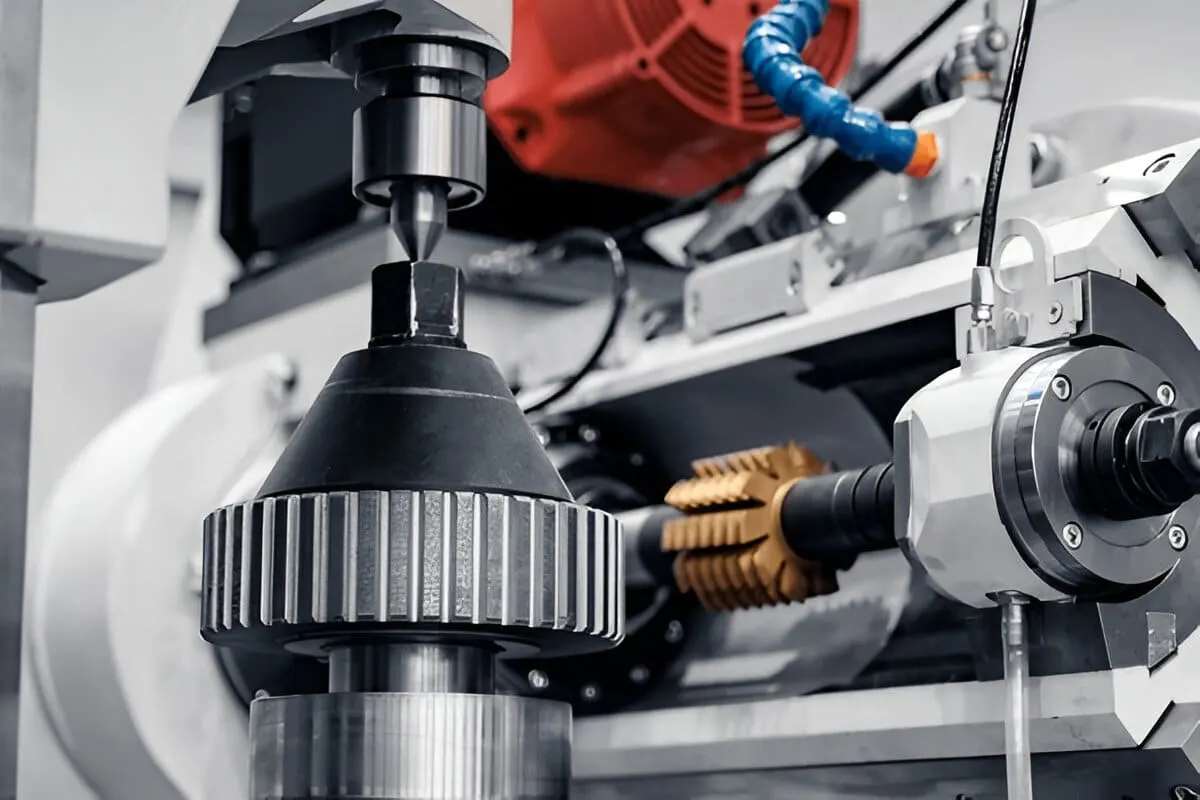
Gear-driven spindles are designed for applications where torque is the primary requirement. A gearbox connects the motor to the spindle, allowing the system to operate at lower speeds while delivering significantly higher torque.
This makes gear-driven systems well-suited for heavy-duty machining, such as cutting large steel components or performing deep material removal.
The trade-offs are increased mechanical complexity, higher noise levels, and slower dynamic response. Gear systems also require lubrication and periodic maintenance, making them less common in high-speed machining environments.
Air Turbine Spindles
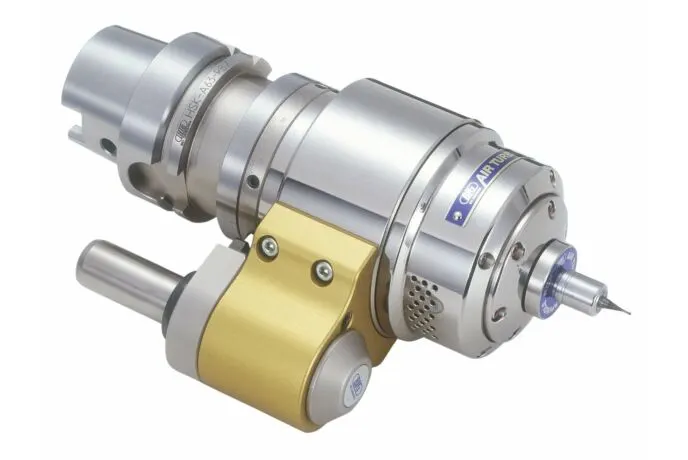
Air turbine spindles operate using compressed air instead of an electric motor. This allows them to reach extremely high rotational speeds, often exceeding 25,000 rpm and going much higher in specialized applications.
Because they generate minimal heat and have very low mechanical resistance, they are ideal for micro-machining, engraving, and high-speed finishing with small tools.
Their limitation is torque. Air spindles are not suitable for heavy cutting and are typically used as specialized tools rather than primary machine spindles.
More on high-speed air spindles:https://www.airturbinetools.com/products/spindles/
Performance Differences: Speed, Torque, and Stability
Each spindle type is defined by how it balances speed and torque.
Built-in and direct-drive spindles achieve high rotational speeds with strong dynamic response, making them ideal for precision machining. Belt-driven and gear-driven systems prioritize torque, making them better suited for heavy cutting operations.
Rigidity also varies significantly. Systems without belts or intermediate components, such as built-in and direct-drive spindles, provide higher stiffness and lower runout. This directly translates to better surface finish and tighter tolerances.
Thermal behavior is another critical factor. Integrated systems require active cooling to manage heat generated by the motor, while belt-driven systems isolate the motor but introduce other inefficiencies.
Why Micro Dynamics Uses Built-In Spindles
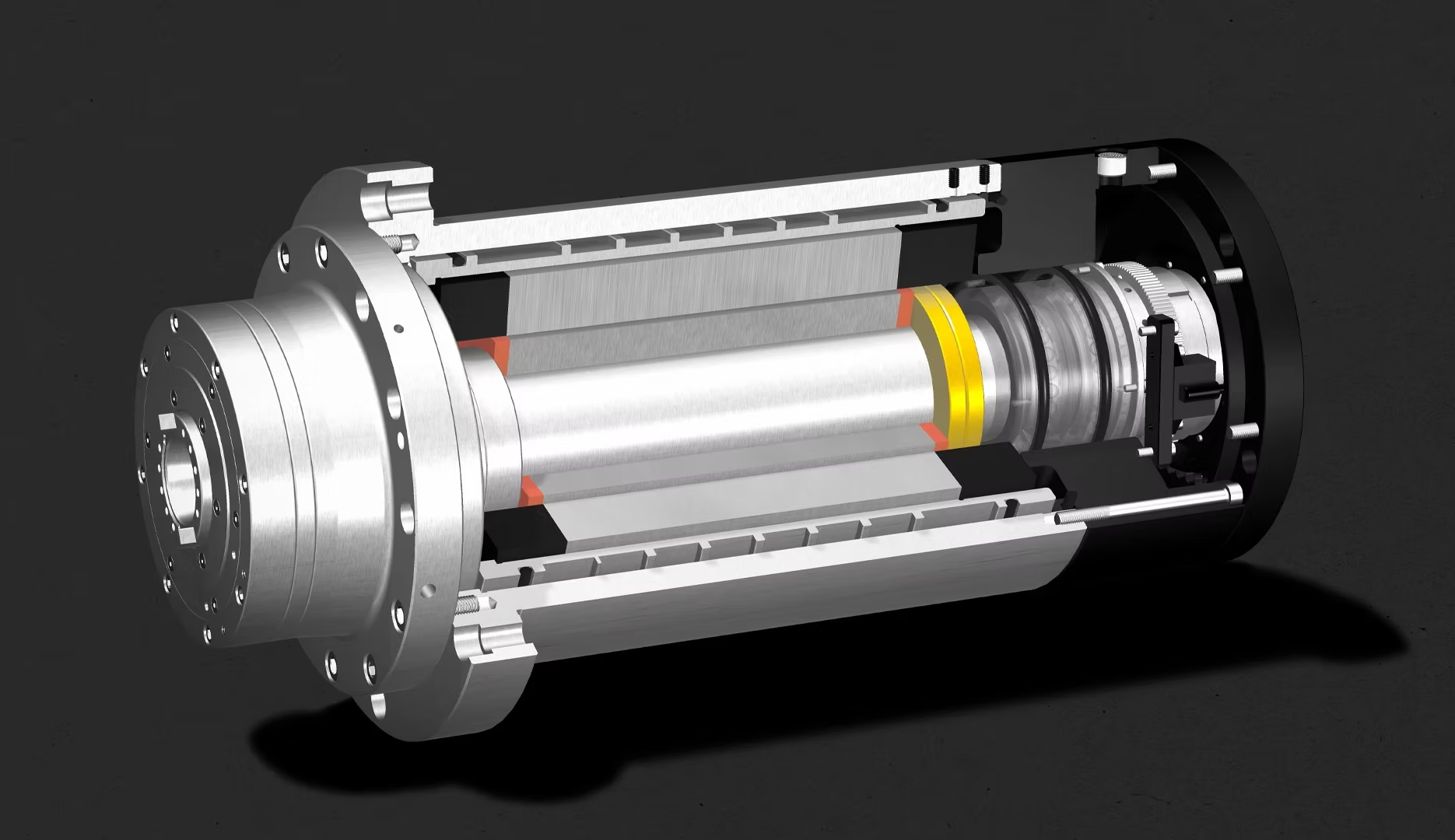
At Microdynamics, spindle selection is driven by performance requirements rather than cost or simplicity.
Built-in spindles provide the combination of rigidity, speed, and thermal stability required for high-precision machining. Micro Dynamics found a perfect balance between connecting these with high power - this incredible combination makes Micro Dynamics machines multi-purpose. By eliminating belts and external couplings, the structure becomes more compact and mechanically stable.
This design also enables faster acceleration and deceleration, improving cycle times in real-world machining. For example, Microdynamics spindles can accelerate rapidly to high speeds, supporting complex toolpaths and high-speed operations.
Thermal stability is another key factor. Integrated cooling systems and high-quality bearing assemblies allow the spindle to maintain consistent performance even during extended operation.
While built-in spindles come with a higher upfront cost and more complex servicing, the performance advantages—particularly in precision applications—make them the preferred choice.
Choosing the Right Spindle for Your Application
The best spindle configuration depends on the type of work being performed.
High-speed machining and precision finishing benefit from built-in or direct-drive spindles, where accuracy and stability are critical. Heavy roughing operations favor gear-driven or belt-driven systems, where torque is the priority.
Specialized applications such as micro-machining may require air turbine spindles, while flexible manufacturing setups may use modular spindle systems.
Understanding these trade-offs allows manufacturers to select a machine that matches their production requirements rather than relying on specifications alone.
Conclusion
The spindle is not just a component—it is the defining element of CNC machine performance. Speed, torque, rigidity, and thermal behavior all originate from how the spindle is designed and integrated into the machine.
Built-in, belt-driven, direct-drive, gear-driven, and air turbine spindles each serve a specific purpose. Choosing the right one depends on the demands of the application.
At Microdynamics, the focus is on power, precision, stability, and high-speed performance. There is no limit on what you can achieve with a Micro Dynamics machine. This is why built-in spindles form the foundation of our machine design, delivering the consistency and accuracy required in modern machining environments.